

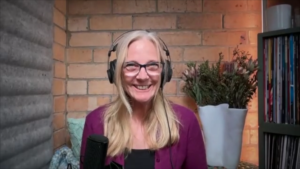
S2 Ep 28 - Fear, the Nervous System, and Staying Human in Unsteady Times
In this episode, Jeanene offers a grounded, heart-led reflection on the collective fear and uncertainty many of us are experiencing right now. She speaks openly about the subtle, ongoing unease that can sit quietly in the background of daily life, even when nothing appears to be wrong in our immediate environment. Jeanene explores how global instability, constant exposure to distressing news, and the sense of unpredictability in the world are being absorbed by our nervous systems, often beneath conscious awareness, and expressed through our bodies in ways we may not immediately recognise.
Rather than trying to eliminate fear, ignore it, or push through it, Jeanene invites listeners to slow down and meet fear with presence, curiosity, and gentleness. She reflects on the difference between being informed and being consumed, and why many of us are living in a state of chronic alert without realising it. This episode offers a reminder that fear is not a personal failure, but a human response, and that stability is not found in pretending things are fine. Instead, Jeanene points toward regulation, connection, and small, grounded acts of kindness within our own communities as ways to remain present, human, and anchored as we move through uncertain times.
Listen on
“When we think that we are coping, we might be psychologically, but our bodies are showing it.”
Jeanene Tracy
Wisdom from Episode 28
“It’s not an obvious fear and it’s not a panic, it’s kind of like this constant murmur in the background.”
“It’s like a sense that the ground just doesn’t feel stable underneath us anymore.”
“Even if none of this is happening in your neighbourhood or nearby or where you live, your nervous system is experiencing it.”
“We’re not meant to process the entire world all at once.”
“When we think that we are coping, we might be psychologically, but our bodies are showing it.”
“Feeling unsettled right now doesn’t mean you’re weak, it means you’re human.”
“Fear is not the problem, fear is an intelligent response to protect ourselves from threats.”
“The challenge today is that fear has nowhere to land and nowhere to be resolved.”
“Fear doesn’t disappear when it’s avoided, it actually settles into the body.”
“Sitting with fear doesn’t mean indulging in it.”
“Safety comes from regulation, from being able to return to yourself again and again.”
“You don’t have to carry the entire future all at once.”
“The world does not need more panic, it needs more regulated, present humans.”
“Fear may visit, but it does not have to become your home.”
Key Themes Explored
The Body Feels What the Mind Tries to Manage
Jeanene speaks to how many people believe they are coping mentally, while their bodies are holding the impact of ongoing fear and uncertainty. She highlights that our nervous systems are not designed to process constant global threat, and that chronic exposure to instability can show up as tension, shallow breathing, illness, and a persistent sense of being on edge. The learning here is recognising the body as an honest communicator, and understanding that physical symptoms are not a personal failure but a human response to prolonged stress.
Fear as a Natural and Intelligent Response
Rather than framing fear as something to eliminate or override, Jeanene reframes it as an intelligent protective response. She explains that fear arises when safety feels uncertain, particularly in response to domination, control, silencing, and aggression on a global scale. The learning offered is that fear itself is not the issue, but what happens when it has nowhere to go and becomes chronic. By acknowledging fear without resisting or feeding it, we create space for it to move through the body instead of becoming embedded.
Grounding, Regulation, and Staying Human
Jeanene emphasises the importance of regulation over reaction. She speaks about practical ways of anchoring safety, such as slowing the breath, feeling the feet on the ground, reducing exposure to constant news and information, and staying connected to trusted people. She reminds listeners that being calm does not mean being ignorant or disengaged, and that we are not required to solve global issues alone. The learning here is choosing presence over panic, softness over armour, and recognising that meaningful impact begins locally, through kindness, integrity, and human connection.